
Fedora KDE + Windows 11 Dual-Boot Workstation
Built and documented a reliable Windows 11 and Fedora KDE dual-boot workstation using separate SSDs, Secure Boot, NVIDIA RTX 5060 drivers, GRUB and rEFInd. The project included real-world boot troubleshooting, Secure Boot key management and a clean firmware-based Windows boot solution.
O projekte
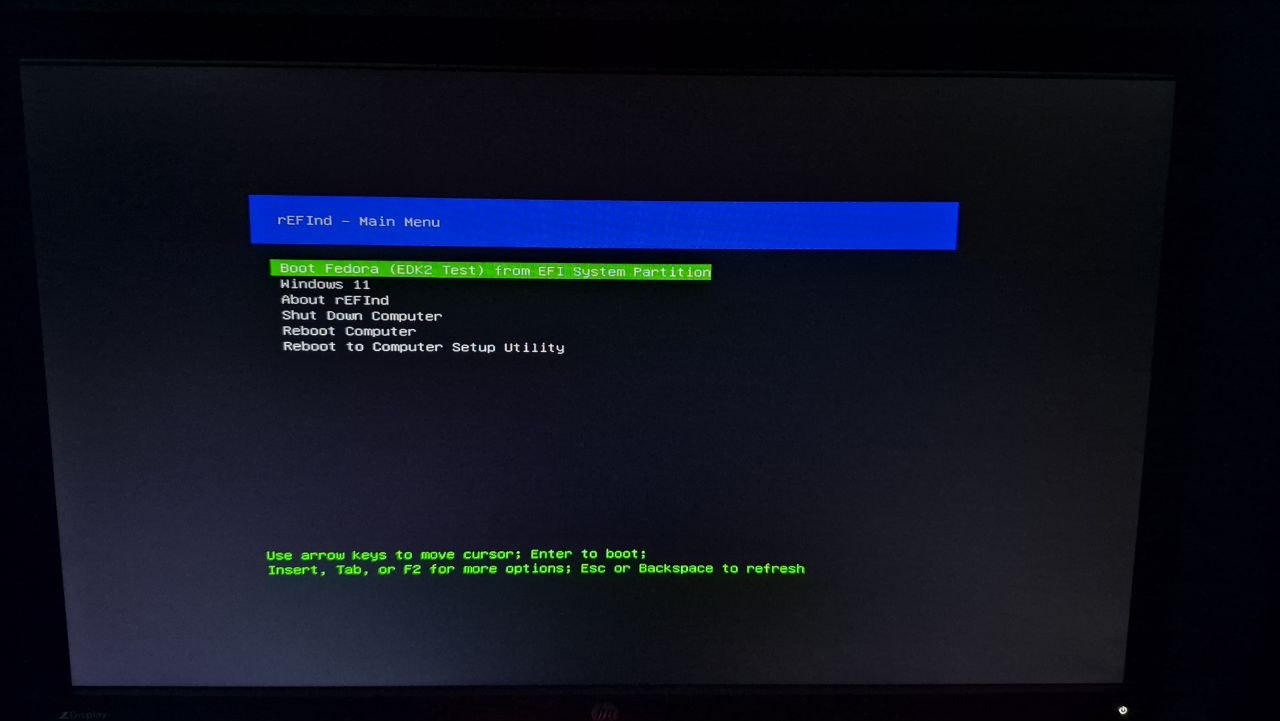
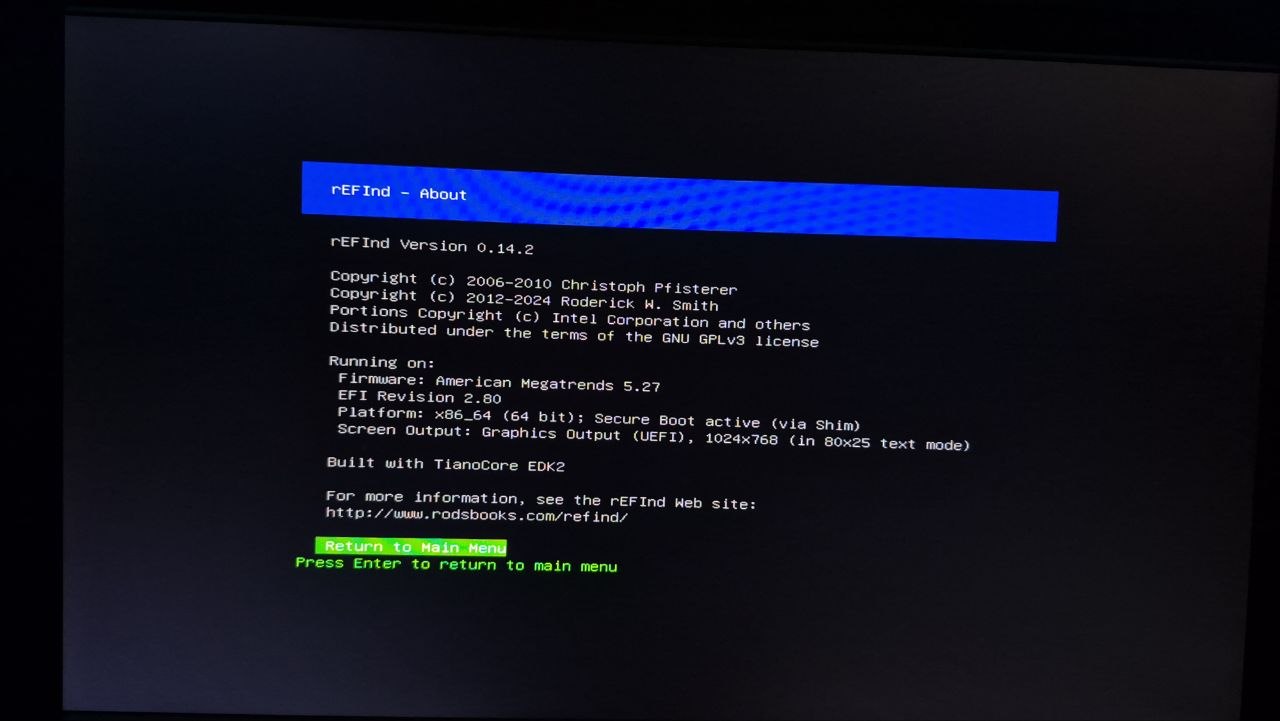
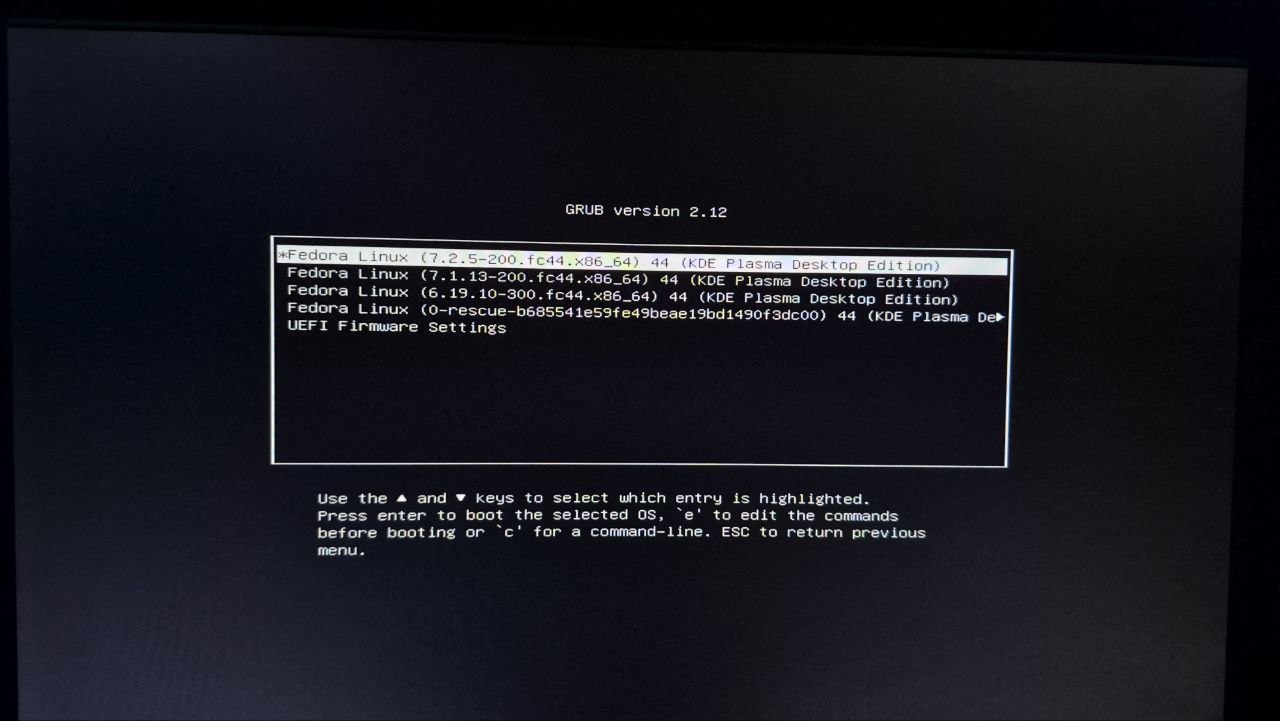
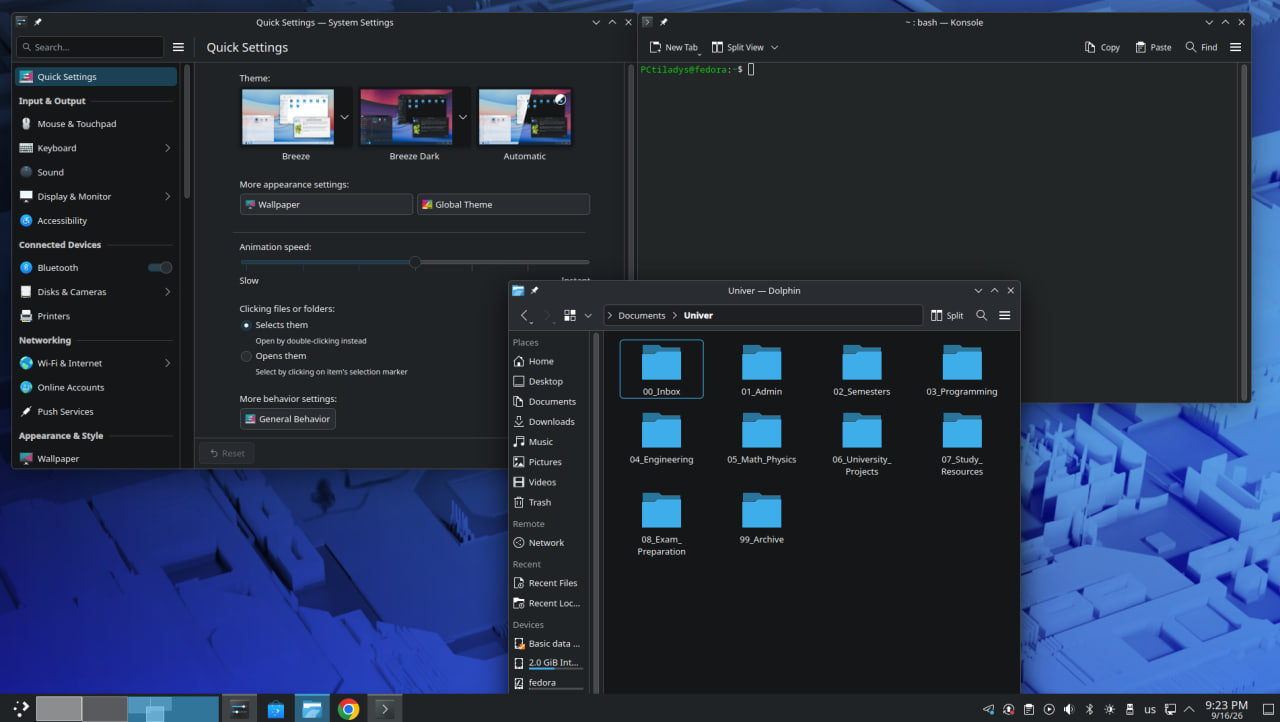
I wanted to build one workstation that could serve two different purposes without compromising either environment. Windows 11 would remain available for gaming and Windows-specific software, while Fedora KDE would become my main system for software development, AI, university work, Docker and engineering tools. I installed the two operating systems on separate SSDs so that Windows and Fedora could keep independent system and EFI environments. The basic installation worked, but several more complex problems appeared afterward. The first major issue was a black screen when Fedora started with my NVIDIA GeForce RTX 5060. I diagnosed the problem through the terminal and discovered that Secure Boot was rejecting the NVIDIA kernel module. I generated and enrolled the required MOK key, rebuilt the NVIDIA module with akmods and verified the final configuration using nvidia-smi, Vulkan and OpenGL. The next problem was the boot system. GRUB could detect a Windows entry, but during boot it could not access the Kingston SSD containing the original Windows EFI partition. Windows itself worked perfectly when launched directly from the ASUS UEFI boot menu, which helped me determine that the problem was not the Windows installation but GRUB's access to that disk during the pre-boot stage. After testing several approaches, I configured rEFInd as the main boot manager. Instead of copying or modifying the original Windows bootloader, rEFInd launches the existing Windows firmware boot entry through UEFI. Fedora continues to use its own signed shim and GRUB environment. I also configured Secure Boot signing for rEFInd, tested an EDK2 build, cleaned the GRUB menu and created a more understandable startup flow. The final boot architecture keeps Windows and Fedora independent while providing one reliable menu for selecting the operating system. I documented the complete process, including the successful configuration, diagnostic commands, failed approaches and recovery steps, so the project can also be used as a practical dual-boot troubleshooting guide.
Moja úloha
System Administrator, Linux Engineer & Technical Documentation Author
Obrázky projektu
Technológie a nástroje
Potrebujete podobné riešenie?
Vytvorme praktické a spoľahlivé riešenie pre vaše potreby.